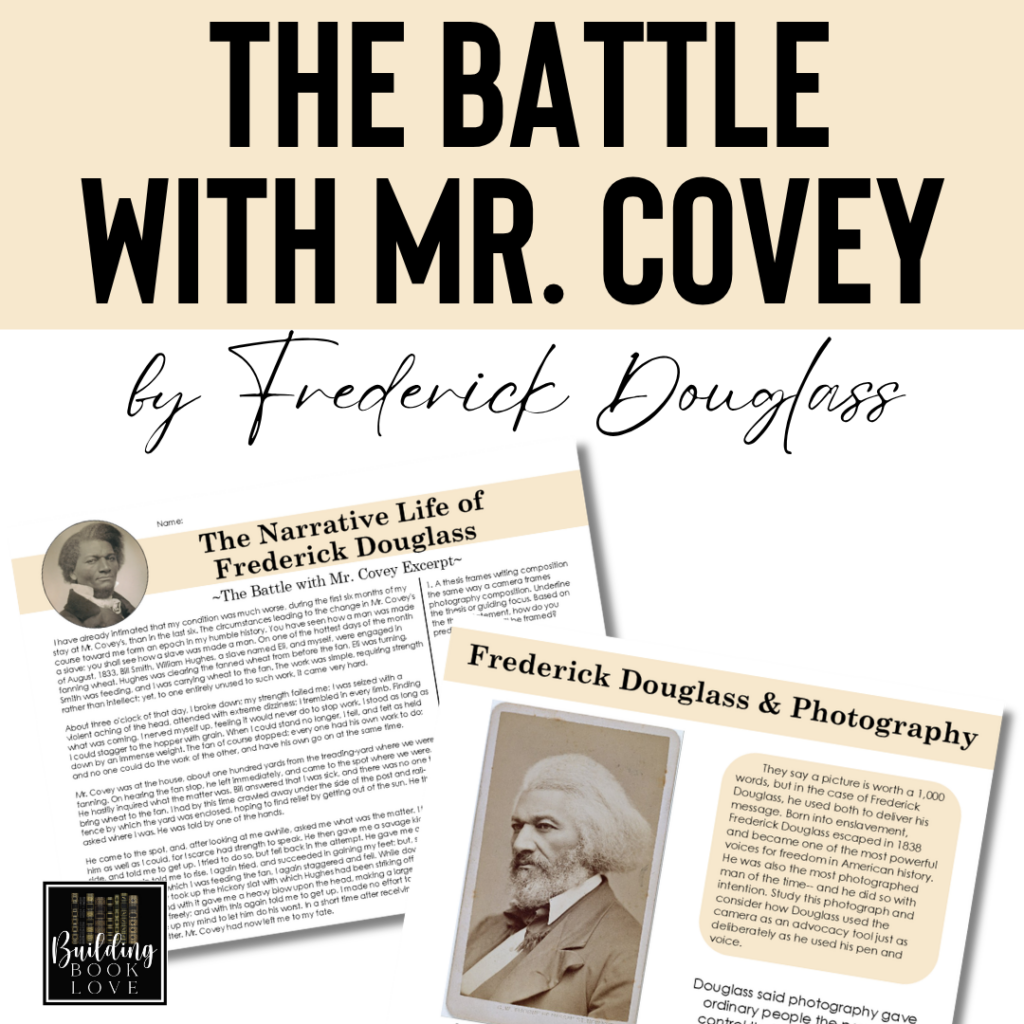
Teaching classic American literature becomes a lot more engaging when you find an angle that makes it relative to modern high schoolers. When I was researching teaching Frederick Douglass, the perfect way to frame my lesson plan came into focus. Did you know that Frederick Douglass was the most photographed man in the 19th century? Do you know who else breaks records for selfies? Teenagers!
Frederick Douglass believed that his image could be just as powerful as his voice. That connection between identity and storytelling is something students instinctively understand, even if they have never thought about it in those terms. Using this photography angle, here are three ways to make your “Battle with Mr. Covey” lesson plans more meaningful.
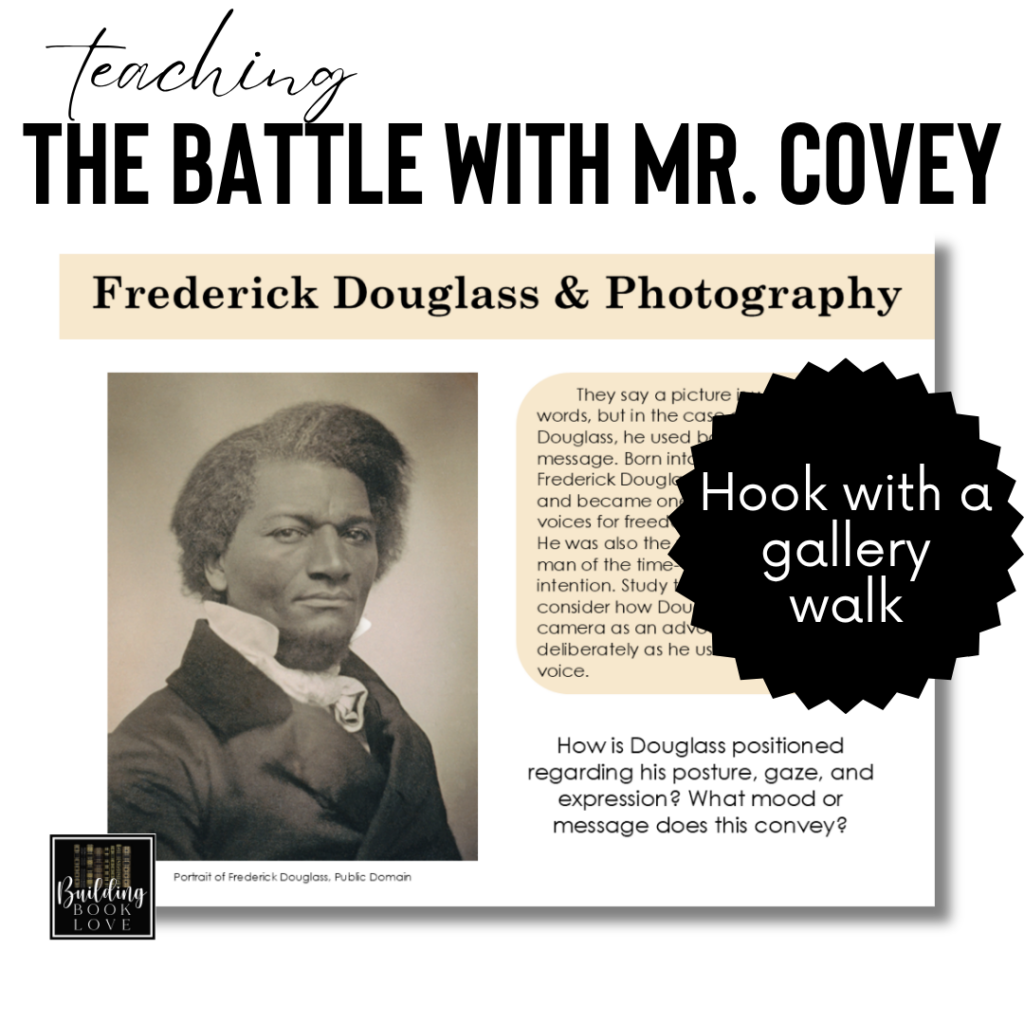
Hook Students with a Gallery Walk
Before students read a single word of the text, get them moving with a gallery walk featuring some of Douglass’s most iconic portraits. There are over 160 known photographs of Douglass, and with the right prompting, they can generate some deep visual analysis and discussion.
For example, one of the prompts in this gallery walk asks, “What is Douglass wearing, and what might his clothing choices communicate about how he wanted to be perceived?”
Not only does this gallery walk introduce students to Frederick Douglass and pique their interest, but it also sets up the voice and photography connection that is woven throughout the entire “Battle with Mr. Covey” lesson plan.
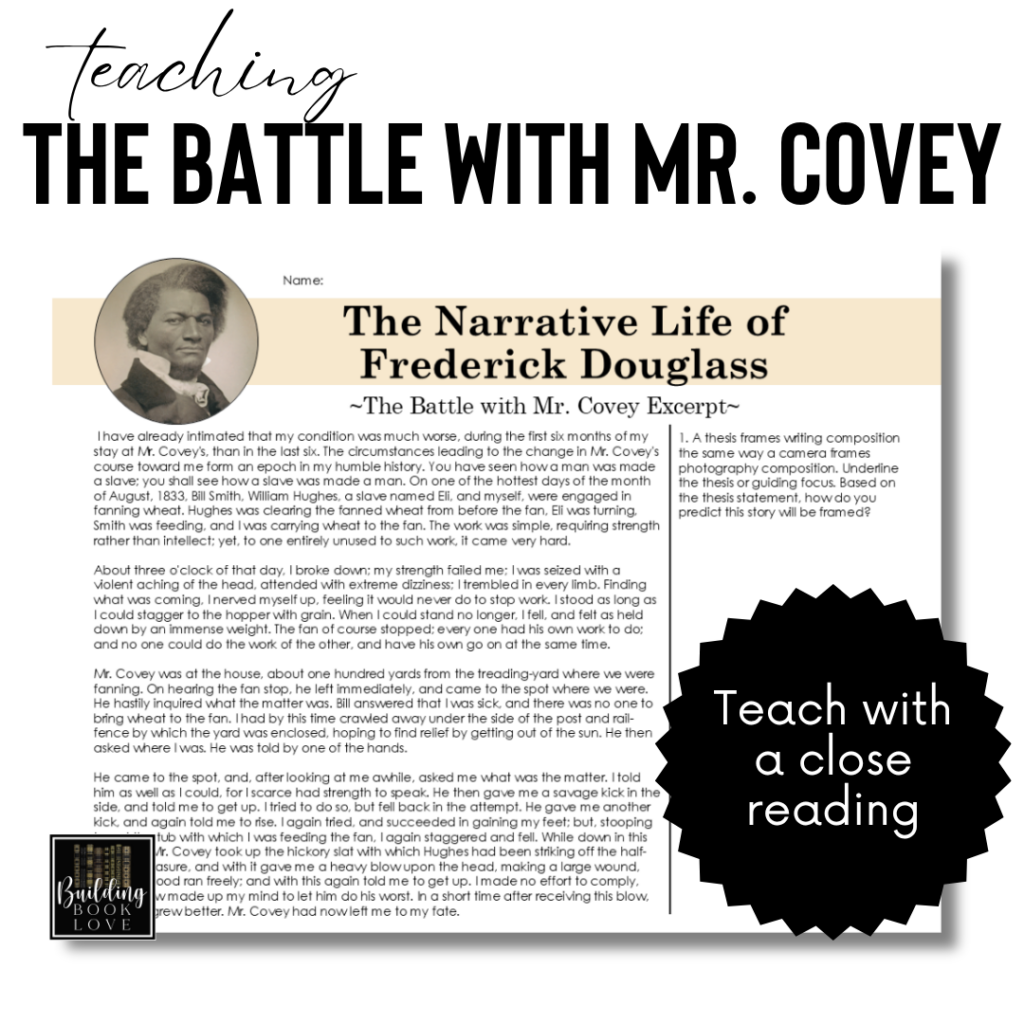
Closely Read The Battle with Mr. Covey
Once students are primed with the photography framework, they are ready to dig into the text. Introduce the chapter with this thesis statement from Douglass himself:
“You have seen how a man was made a slave; you shall see how a slave was made a man.”
Ask students to predict how the story will be framed based on that thesis alone. Most will immediately pick up on the before-and-after structure, and that sets them up to read with purpose.
From there, the close reading questions use photography as an analytical lens throughout the chapter. Here are a couple of examples from this “Battle with Mr. Covey” close reading:
- Photography means “drawing with light.” Writing draws with words. What imagery and figurative language does Douglass use to help readers picture the scene? Underline examples and explain.
- Portraits can capture mood and tone. How does this scene compare or contrast with your favorite portrait of Frederick Douglass?
That last question is simple but generates a really rich discussion. Students have to synthesize the emotional and physical details of the scene into a single image, which is exactly the kind of close reading thinking you want them to do.
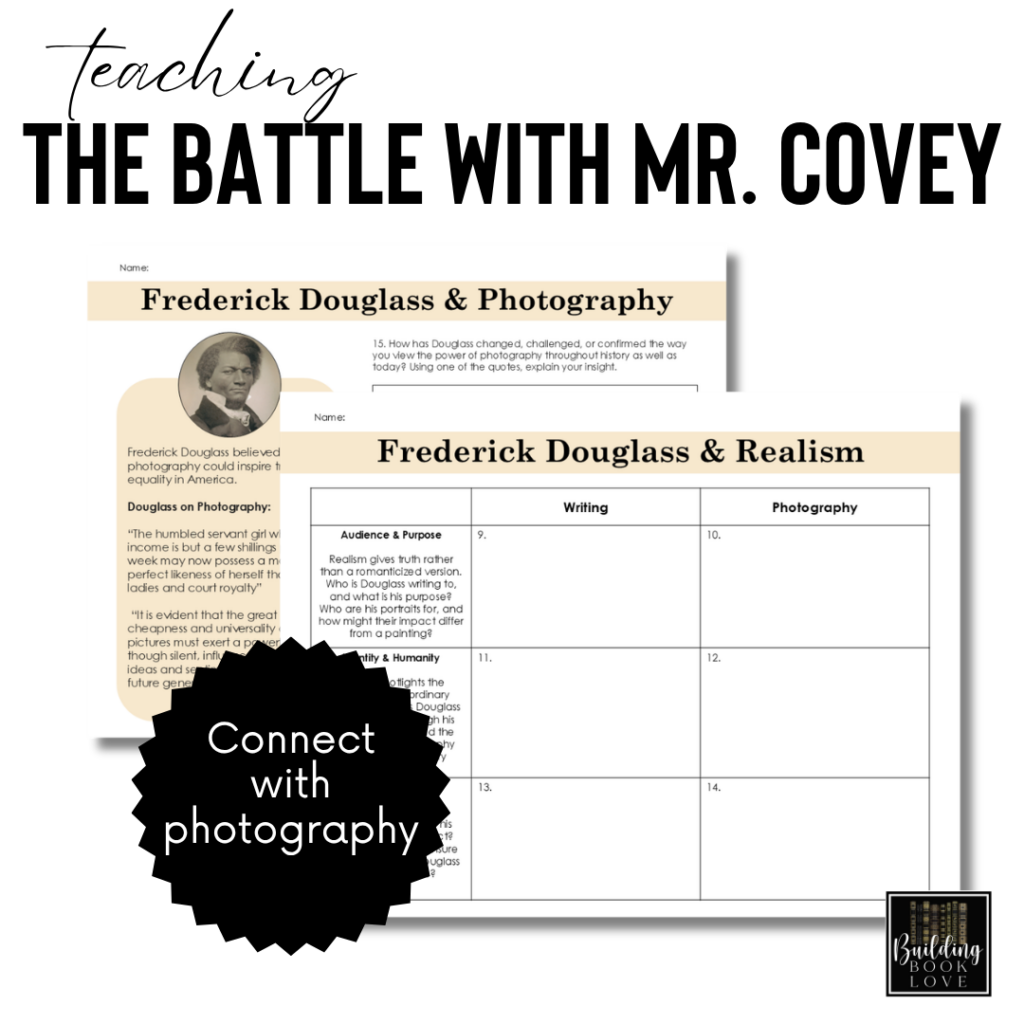
Have Students Make Photography Connections
The closing activity asks students to make connections between Douglass’s writing and his portraits. Get students moving again by doing a quick stroll through the gallery walk to review the photographs. Then have students read this article: Frederick Douglass and the Power of Photography from the National Park Service.
Then have students look at both his writing and his portraits through the lens of literary realism. Since you’ll likely be teaching Frederick Douglass during your American literature realism unit, this will help students understand how it all fits together.
For example:
- Audience & Purpose: Realism gives truth rather than a romanticized version. Who is Douglass writing to and what is his purpose? Who are his portraits for and how might their impact differ from a painting?
- Identity and Humanity: Realism spotlights the experiences of ordinary people. Douglass wrote, “The humbled servant girl whose income is but a few shillings per week may now possess a more perfect likeness of herself than noble ladies and court royalty.” How does this help you consider your own access to photography in the modern world?
What I love about this closing activity is that students are making connections across mediums, across time periods, and across their own prior knowledge in a way that sticks. Frederick Douglass understood something that teenagers today do too — the image you put into the world tells a story and that story can be a form of power. By connecting his portraits to “The Battle with Mr. Covey,” students are thinking about self-representation, voice, and the legacy these can leave behind.
Download this Frederick Douglass lesson plan here and read more ideas for teaching American literature here.

