I feel that it is essential for every English literature student–whether that be AP, honors, regular, or support level– to have the ability to read a single text through different critical lenses. This skill teaches students how to have an open mindset and view the world through multiple perspectives. And isn’t that one of the fundamental purposes of reading?
Plus, literature lenses are the perfect thing to have on hand in your English class. Want deeper literary analysis? Critical Lenses. Need a quick grouping strategy? Critical Lenses. Wish you had a lesson to use on the fly with any book? Critical Lenses.
Though literary criticism lenses have intimidating names, teaching critical lenses doesn’t have to be complicated. Here are my tried-and-true strategies for making this concept accessible and engaging for every learner!
What are critical lenses?
But first, let’s go over the basics. So, what are critical lenses, and why should you teach them? As I explain in this critical lens resource:
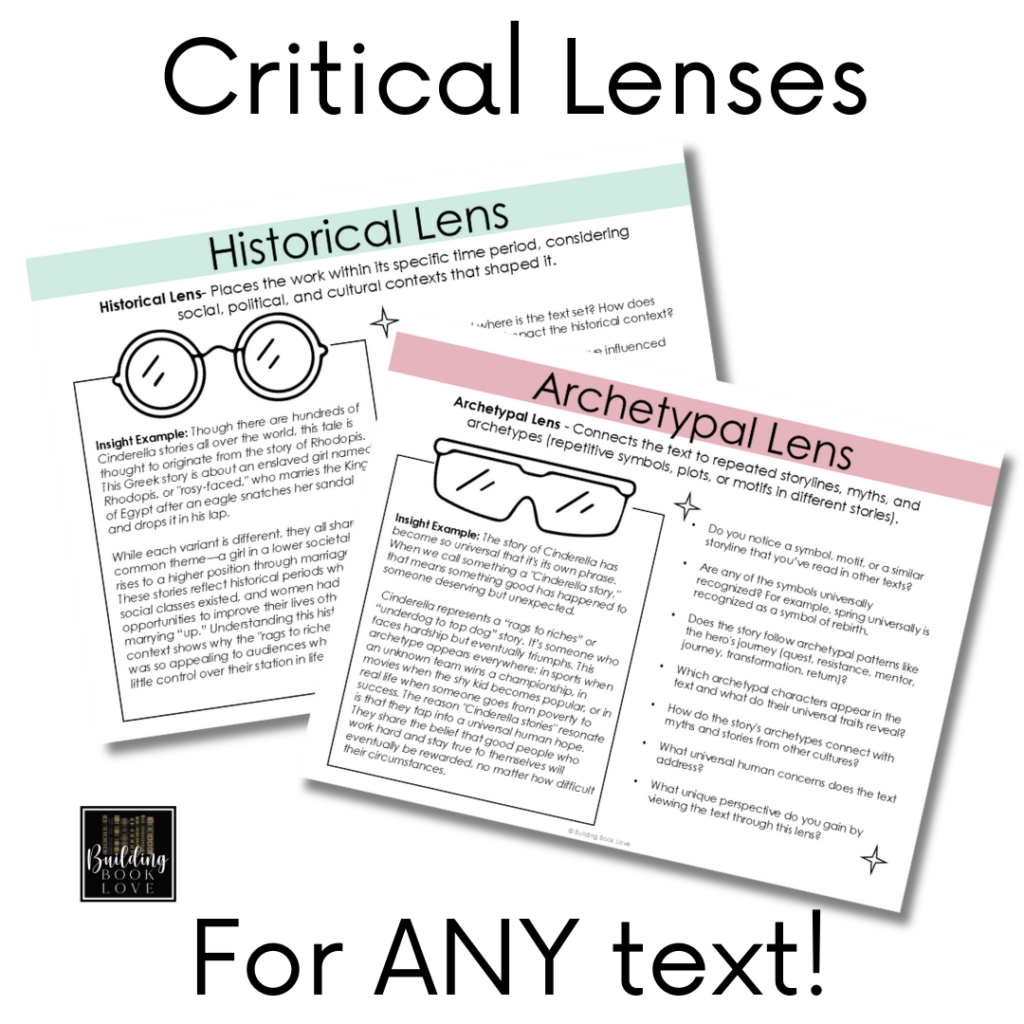
Critical lenses in literature are different perspectives or “glasses” used to analyze a text. Trying a new lens helps readers see beyond their own point-of-view to gain deeper insight and understanding.
What are the most common types of critical lenses?
Though there are many different lenses from which to view literature, the most common and applicable types of critical lenses are:
- Archetypal Lens
- Ecocriticism Lens
- Gender Lens
- Historical Lens
- Psychoanalytic Lens
- Reader Response Lens
- Socio-Economic Lens
How to Teach with Critical Lenses for Literature:
One of the best things about teaching critical lenses is that once students have a basic understanding, you’ll be able to repeat this strategy over and over again. That’s because every time you use the literature lenses, they’ll get something new out of it, depending on the text!
Plus, you can also discover a new lens. Check out my Keeping the Wonder coauthor’s latest book, Role Call: Plan with Perspective, Create High-Engagement Lessons, and Unleash Your Creative Teaching Potential for even more ideas! (affiliate links)
Scaffold Familiar Fairy Tales for Critical Lens Examples:
Fairytales are perfect for introducing critical lenses because they’re short, familiar, and packed with examples of gender stereotypes, class struggles, archetypal characters, and more. My go-to is Cinderella because students already know the story, which frees up their cognitive energy to focus on analysis rather than comprehension.
For instance, this critical lens choice board provides students with Cinderella critical lens examples. This allows them to grasp the concept before applying a literature lens to a more advanced text.
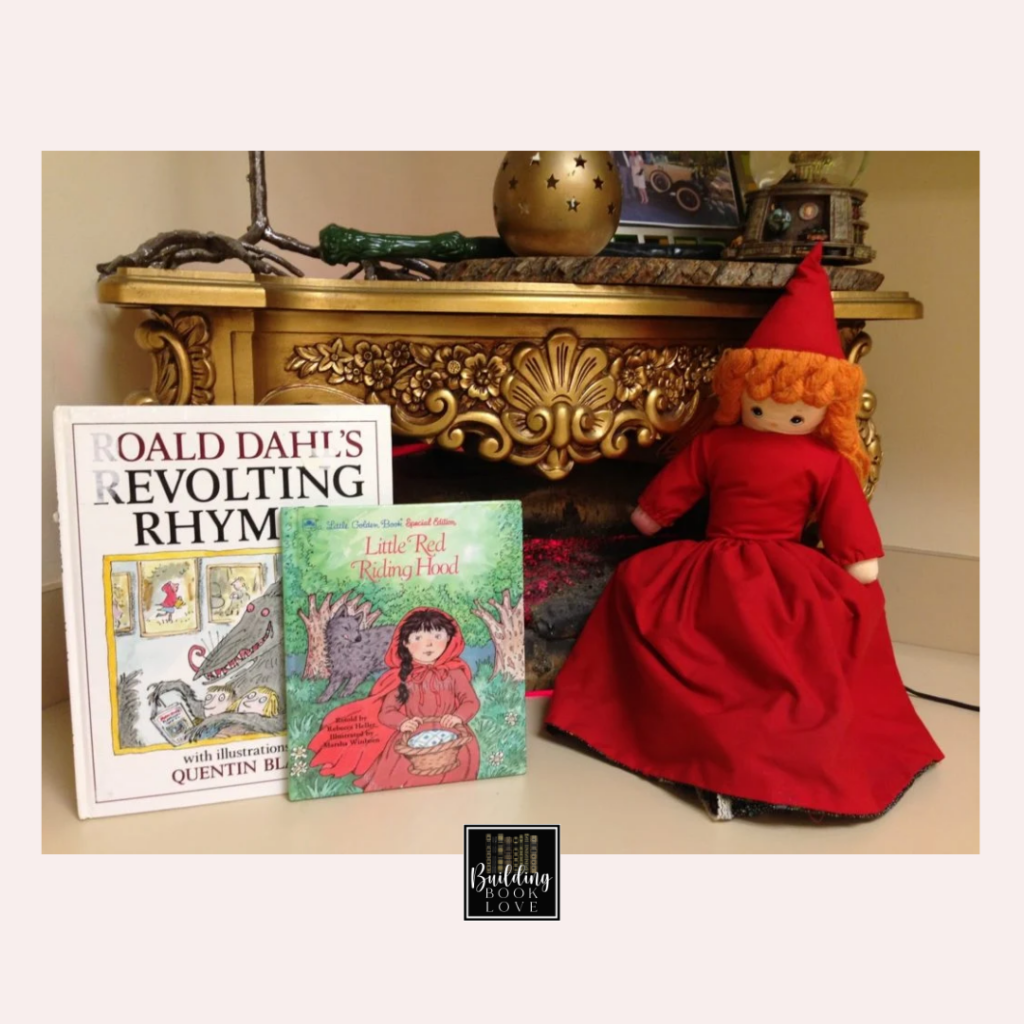
I also love using “Little Red Riding Hood”—especially Roald Dahl’s hilarious twist where Red transforms from vulnerable and gullible to sassy, strong, and violent. Comparing the original to Dahl’s version is a natural segue into understanding how perspective changes everything. (Bonus: This flows perfectly into teaching Dahl’s short story “Lamb to the Slaughter”!)
Side note: Does anyone else remember those creepy two-sided Little Red Riding Hood dolls from the 80s? The ones with grandma and the wolf hidden under the dress? I still use mine to freak out my students. No regrets.
Teach Critical Lenses with a Movie
Whether you teach a film study elective or a regular English class, movies make a great teaching tool, especially when you give the movie a purpose. And just like with fairy tales or picture books, movies create an easier-to-understand bridge for applying critical lenses to move advanced texts.
For example, you can use The Lion King to teach critical lenses, then have students apply the critical lenses to Hamlet.
Or, you can use critical lens examples from Harry Potter, then apply them to any hero-based story like Beowulf.
Yet another great critical lens example is using Zootopia as a pairing with Animal Farm.
Again, these are just examples. Yes, some movies and books have more critical lens examples than others, but the beauty of literature lenses is that they are designed to apply to ANY text! Using movies students already love removes barriers and gets them excited about deeper analysis!
Use Tactile Lenses to Teach Literary Criticism
In the age of Ai and technology use research, more English teachers are going back to the basics with paper activities. One of the best ways to teach critical lenses is with a tactile lesson plan.
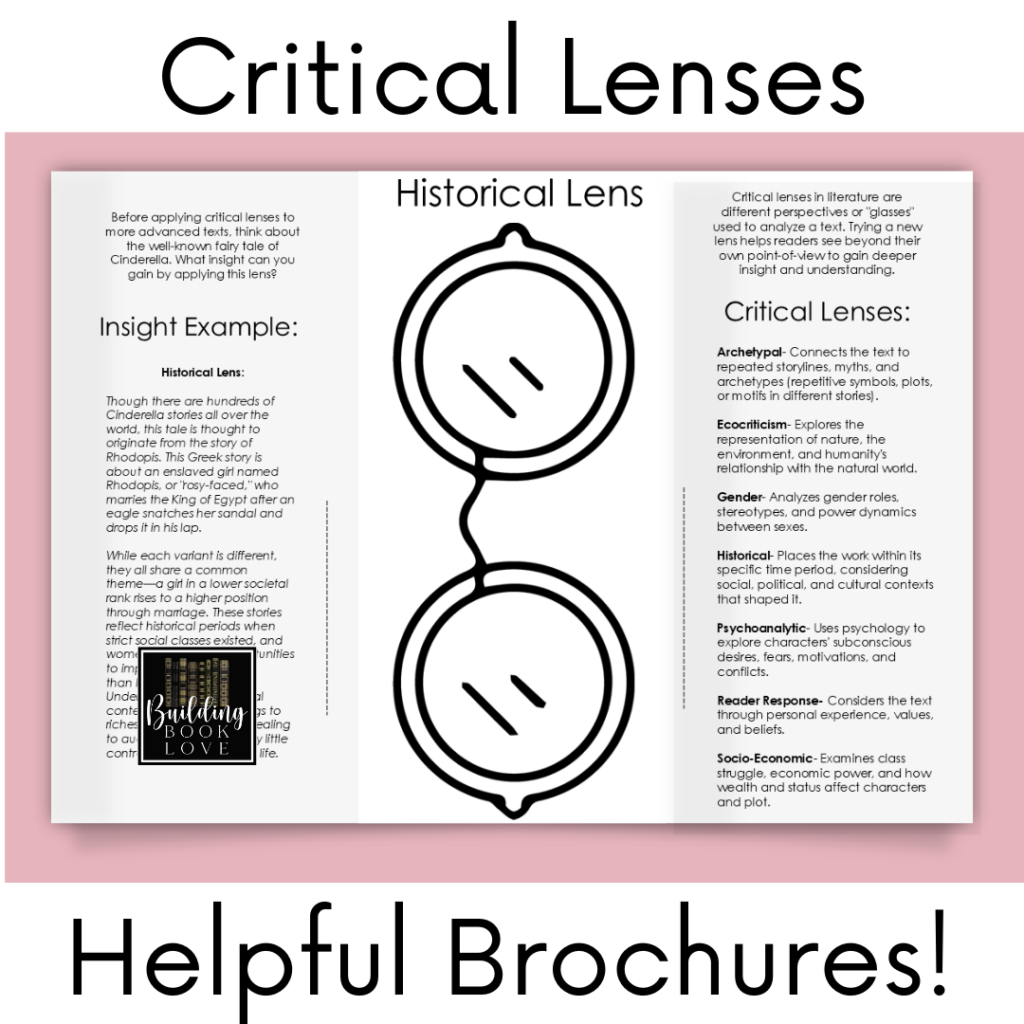
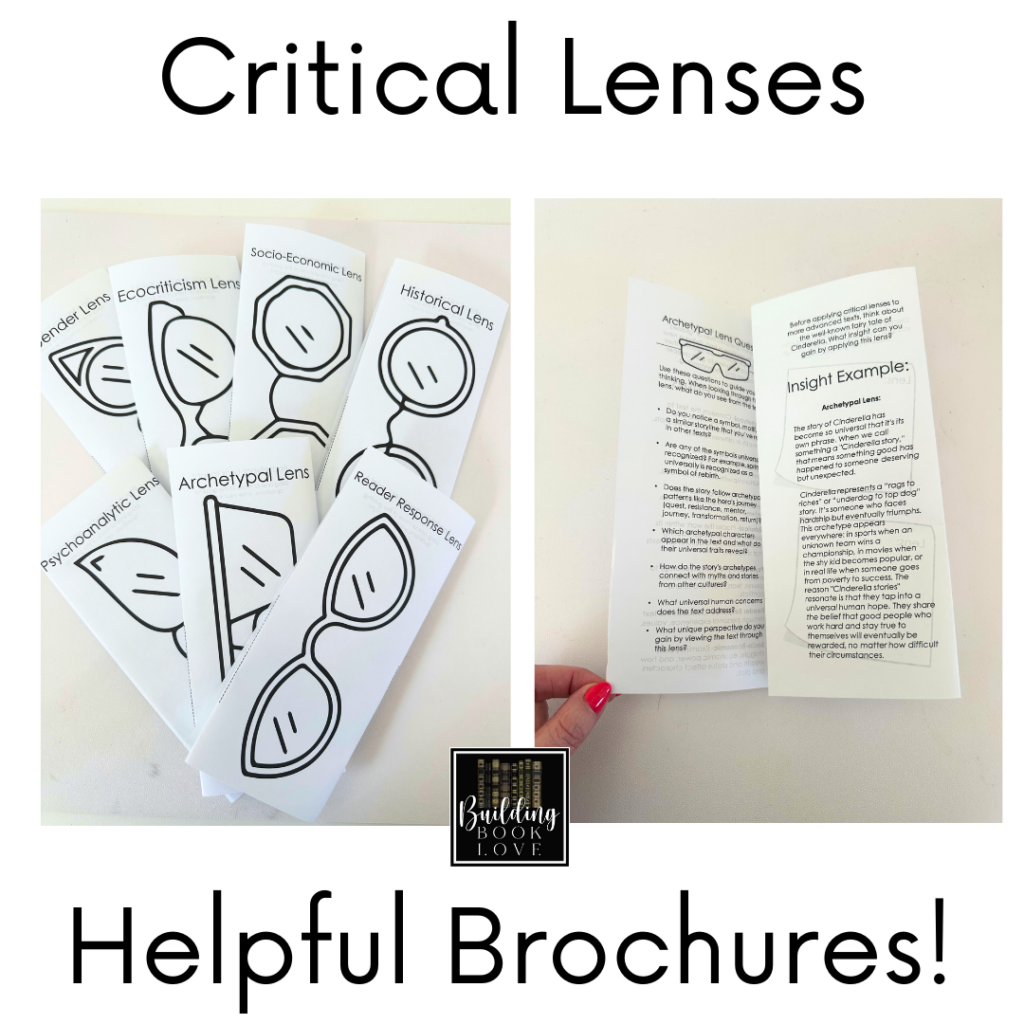
For example, these critical lens brochures are designed to help students choose a pair of glasses that helps them see the text from a new perspective. Here’s how it works:
- Randomly (or strategically) hand out a mix of lenses
- Students get an overview and a critical lens example in each brochure
- Students then apply the critical lens to the text they are working with
- Students write their own insight in the brochure
- Then, group LIKE students together to share insights.
- Next, have students mingle to find different lenses to discuss with.
- Lastly, instruct students to write additional insight they got from talking to different students/lenses.
Physically working with different “glasses” gives students a concrete, memorable way to understand that the same text can be interpreted in multiple, valid ways. It all depends on your perspective!
Give students Choice and Voice with Literature Lenses:
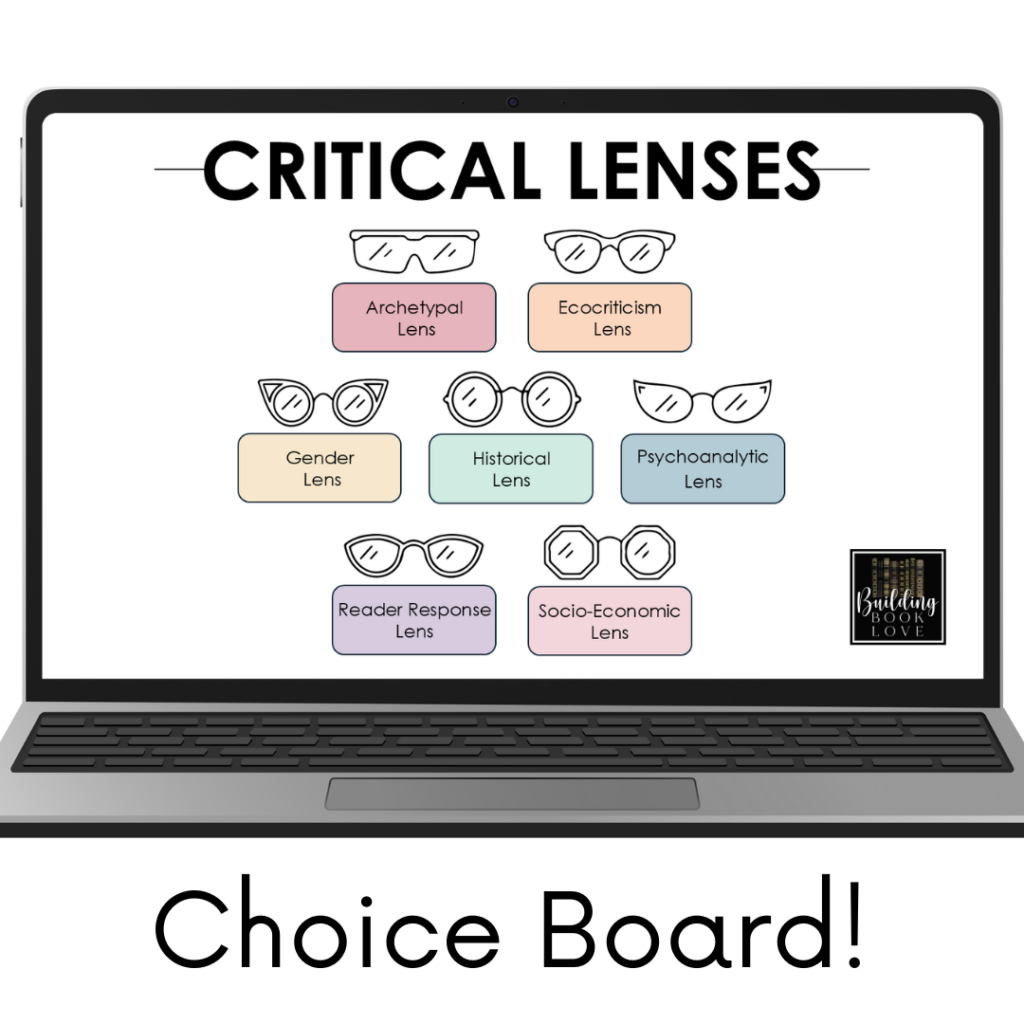
Whether using digitally or in print, the number of applicable critical lenses creates the perfect opportunity to give students choice and voice. For example, this critical lens choice board prompts students to explore all the literature lenses, then choose the one they want to focus on the most.
Critical lenses naturally differentiate instruction. Advanced students can challenge themselves with more advanced literary analysis. Students who struggle with analysis can choose one lens that resonates with their personal experience and build confidence from there. The choice element ensures buy-in while the guiding questions provide the scaffolding everyone needs.
So yes, literary criticism lenses have intimidating names. But as you can see, teaching them doesn’t have to be complicated or serious. With the right strategies—fairytales for scaffolding, pop culture for relevance, and tactile activities for engagement—you can make this abstract concept concrete and accessible for every learner.
So grab this critical lens lesson plan, pick a text (any text!), and watch your students discover that there’s always more than one way to see a story!


80's kid here… no creepy doll! I've never seen one, lol! These are great ideas, and I really like the fun side of including the glasses.
Thanks, Ashley!
Oh man. I'm totally taking a video of this and sending it to you. It's beyond creepy!!!
I love this idea of using actual glasses. When I say the word "lens," I can literally see my students' eyes glaze over! Ha! This is such a simple but practical and fun idea. Great tips for teaching critical lens units. As a side note, you mentioned The Lion King…and I just have to say how much fun I have using that movie as an introduction for literary terms. It's perfect for so many things. I've never seen the disturbing doll before…but she's perfect for Halloween. 🙂
Sold! I love the lens idea and want to try something like this out in my class. Even though some of my students may think it's goofy, I know they will love it!
Another 80s girl without that creepy doll! Sorry!
I love this idea… I do a Fairy Tale analysis paper with my students and this is making me think of mixing it up this semester.
Do you have readings on each of those "lenses" that students read or just the examples from HP?
The use of the actual "lenses" is a really thoughtful addition. It can help the kids to "see" the difference– though I imagine many of mine would be too resistant, it can still help them. Wonder if it would help for the resistant ones to write notes about what the lens means on it, so they have it handy even if they won't wear the glasses (because of "image" issues.)
This looks like such a fun, engaging activity,Ashley!
You had me hooked at Harry Potter! Seriously, this looks like a fantastic way to get students thinking critically in a fun way. I love the addition of the actual lenses. I will definitely be sharing this blog post with my ELA teacher friends! Thank you for sharing such a creative and student-friendly activity!
This is such a fun idea, and I'm sure that using the actual lenses would add a ton to my lessons where my students struggled. Super creative!
The more goofy I am or the lesson is, the more they like it! I think my middle school students would LOVE this!
I absolutely love literature and truly enjoy analyzing different texts with my students! I love how they each discover that having different perspectives is great and they can still all have correct answers nevertheless! Really liked your ideas, especially the critical lenses activity, as I teach high school students. Please, keep them coming… 🙂
Wow thank you so much for the encouragement and kind words. This means so much 🙂
I woke up this morning thinking I needed to create a lesson to explain this to my 11th- and 12th-grade students. Thank you for this email. You saved me once again from reinventing a wheel for a skill set that feels so important right now, as students are inundated with media.
Thank you so much for the kind words! I’m happy to help!