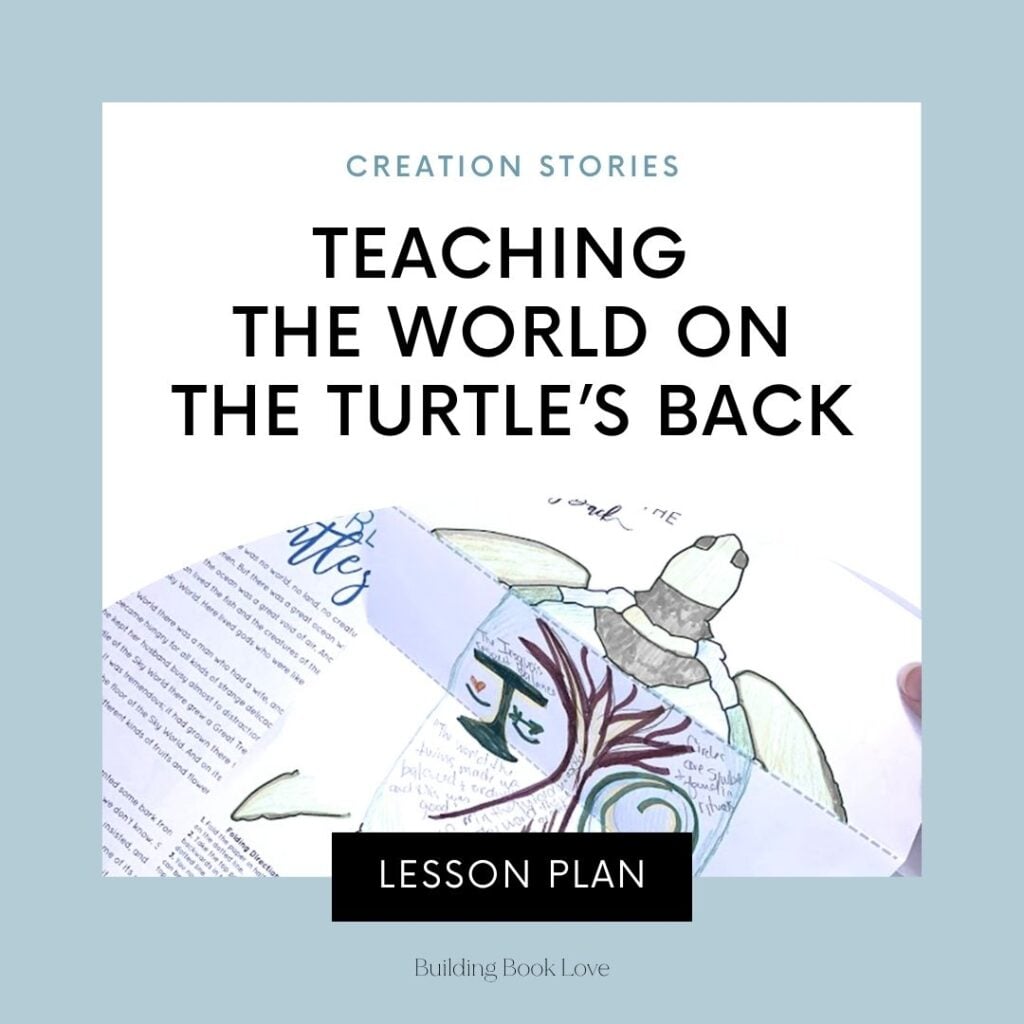
The World on the Turtle’s Back” is often the first text in your American Literature class, so I always felt pressure to make a great first impression and do this Iroquois creation story justice. To me, this meant “The World on the Turtle’s Back” lesson plan ideas that will set a respectful tone for new perspectives, scaffold activities to give students a confident start, and add a creative element to encourage imagination!
Here are some lesson plan ideas to start you off on the right foot when teaching “The World on the Turtle’s Back!”

Set the Foundation by Introducing a Creation Story (I Do):
Hook students with a quick Hindu creation story video. Much like scaffolding with picture books, this video shows beautifully animated illustrations to help students better understand the concepts before moving on to higher level texts. Have students watch for three key elements that appear in creation stories across cultures:
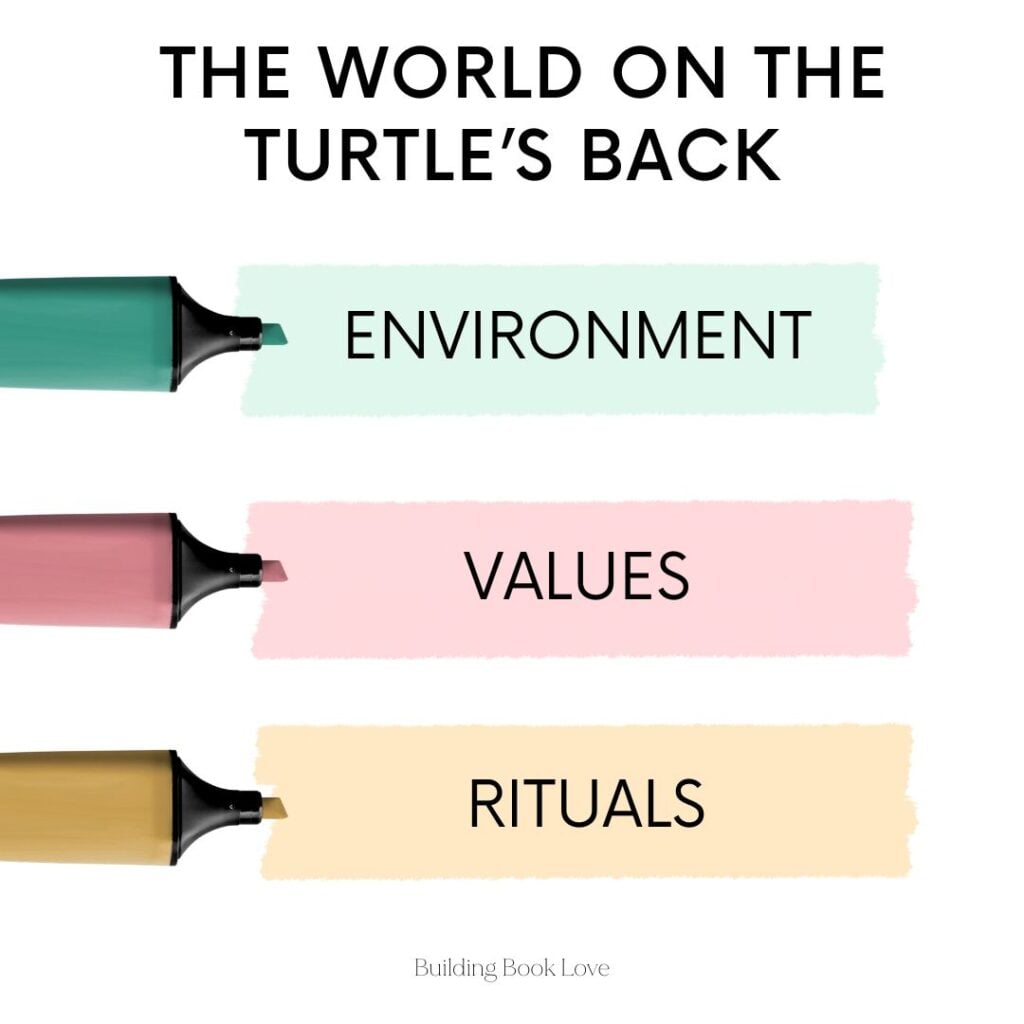
- Environment: What can we infer about the physical world and climate?
- Values: What does this culture prioritize or hold sacred?
- Rituals and traditions: What practices or beliefs are suggested?
From the Hindu creation story, students might notice a tropical environment with exotic elements, values that emphasize beauty and peace, and possible rituals acknowledging multiple names for one divine being. This “I do” guided practice prepares them for independent analysis later.
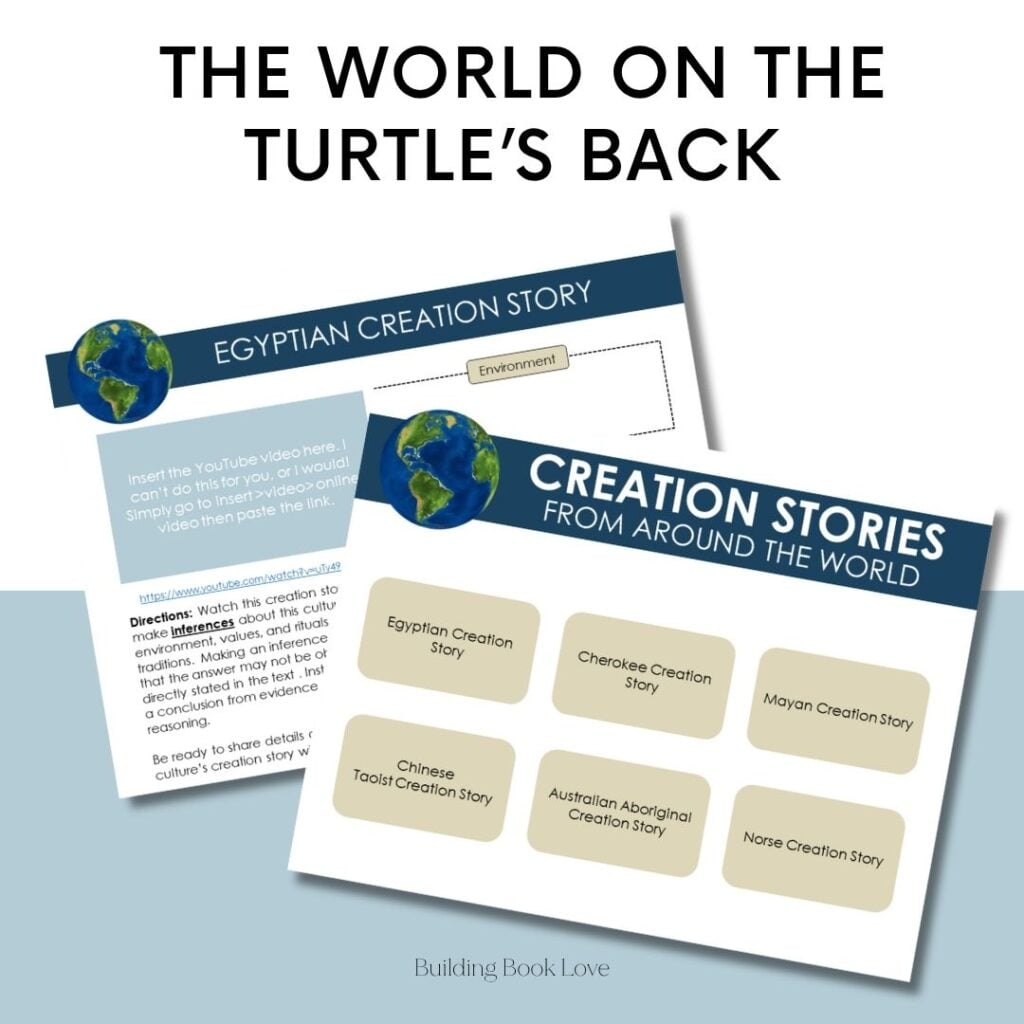
Explore Creation Stories from Around the World (We Do):
Now comes the “we do” portion where students work in small groups. Give students choice boards that include creation stories from all around the world. Have students choose their top interest, then group them accordingly.
Each group analyzes its assigned story using the same three-element framework (environment, values, traditions). Have them prepare their findings on colored paper or sticky notes—green for environment, pink for values, and yellow for traditions. This helps students to visualize the creation story elements throughout different cultures.
The beauty of this activity is that students recognize patterns across cultures and differences in perspectives. They’ll start noticing how geography influences creation stories and how universal themes, such as good versus evil, appear in different forms.
Read the Biblical Creation Story (You Do):
For the independent practice part of “The World on the Turtle’s Back” lesson plan, have students read the Judeo-Christian biblical creation story. They’ll use the same analytical framework they’ve been practicing, but now they’re working solo to identify environment, values, and traditions.
After reading, facilitate a discussion comparing the biblical story to the others they’ve encountered. Ask, “What do you notice about similarities and differences?” This comparison sets up the deeper analysis they’ll do with “The World on the Turtle’s Back.”
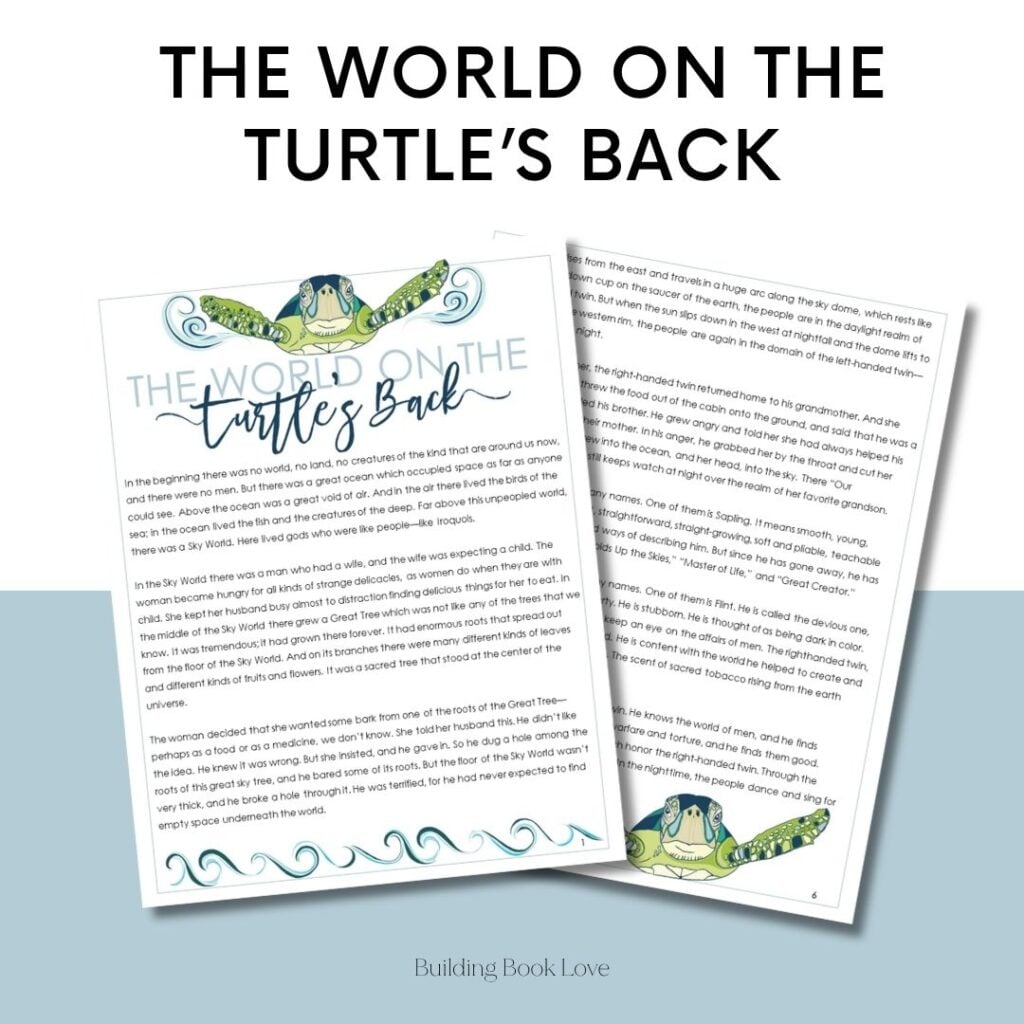
Analyze The World on the Turtle’s Back (We Do):
Now it’s time to read and analyze the Iroquois creation story. “The World on the Turtle’s Back” is an engaging short story that students will enjoy! Plus, it serves as a great starting point for adding Native American voices to your American Literature class. As you read together, have students continue their color-coding to highlight evidence of environment, values, and traditions.

Compare Creation Stories (You Do):
The easiest way to add depth to any lesson is with comparison. The creation story comparison worksheet helps students examine the biblical and Iroquois stories side by side. This activity helps students analyze cultural differences in how humans relate to the natural world.
For example, in the biblical story, humans have “dominion over the fish of the sea, and over the fowl of the air, and over the cattle.” The Iroquois story presents a different relationship where humans coexist within a more balanced ecosystem.
This comparison reveals different perspectives about our place in the world. Students begin to understand how stories shape cultural identity and worldview.
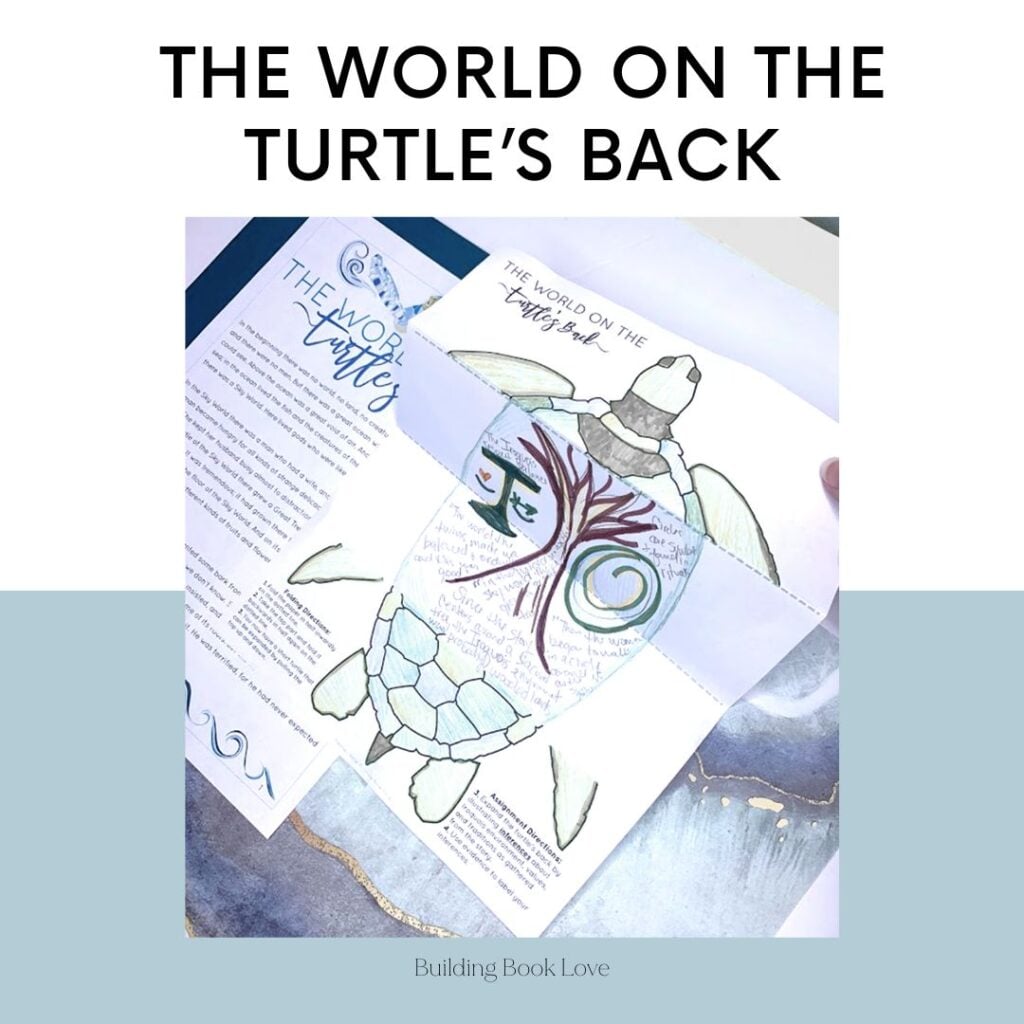
Create a World on the Turtle’s Back 3D One Pager (You Do):
End your “The World on the Turtle’s Back” lesson plan with a creative, hands-on activity. The expanding turtle craft requires students to visually represent creation story elements on the turtle’s back while providing textual evidence for their inferences. Think of it as a 3D One Pager!
Students create an accordion-style turtle that expands to reveal their analysis. On the turtle’s back, they illustrate and label evidence of Iroquois environment, values, and traditions.
This creative activity appeals to different learning styles while serving as an excellent assessment tool. You can see at a glance whether students understand the connection between textual evidence and cultural inference.
Teaching “The World on the Turtle’s Back” helps students engage with diverse perspectives while building analytical skills. By scaffolding activities, encouraging collaboration, and adding creative elements, you can help students connect with the text and understand the world on a deeper level.
You can download “The World on the Turtle’s Back” lesson plans here, or elevate your entire early American unit with this bundle: Native American and Early American Unit

