The Tell-Tale Heart by Edgar Allan Poe has everything an ELA teacher could ask for — it’s short, spooky, and full of sensory details. As a psychological thriller girly, I may be a little biased, but I truly believe this story is one of the best ways to hook even your most reluctant readers. Between the narrator’s unraveling, the buildup of that maddening heartbeat, and Poe’s genius use of imagery, there’s so much to sink your teeth into.
Here are five Tell-Tale Heart activities to build suspense, deepen comprehension, and get students excited about a 200-year-old spooky short story.

Hook students with heartbeat sounds
Imagine walking into a darkened room and hearing the eerie sound of a heartbeat. You’d be a little creeped out, right? With basically zero effort, you can pique students’ curiosity and set the tone by playing a heartbeat sound as students walk into the room. This immediately signals that it’s not a normal reading day, and it primes students for the sound imagery that becomes so important later in the story.
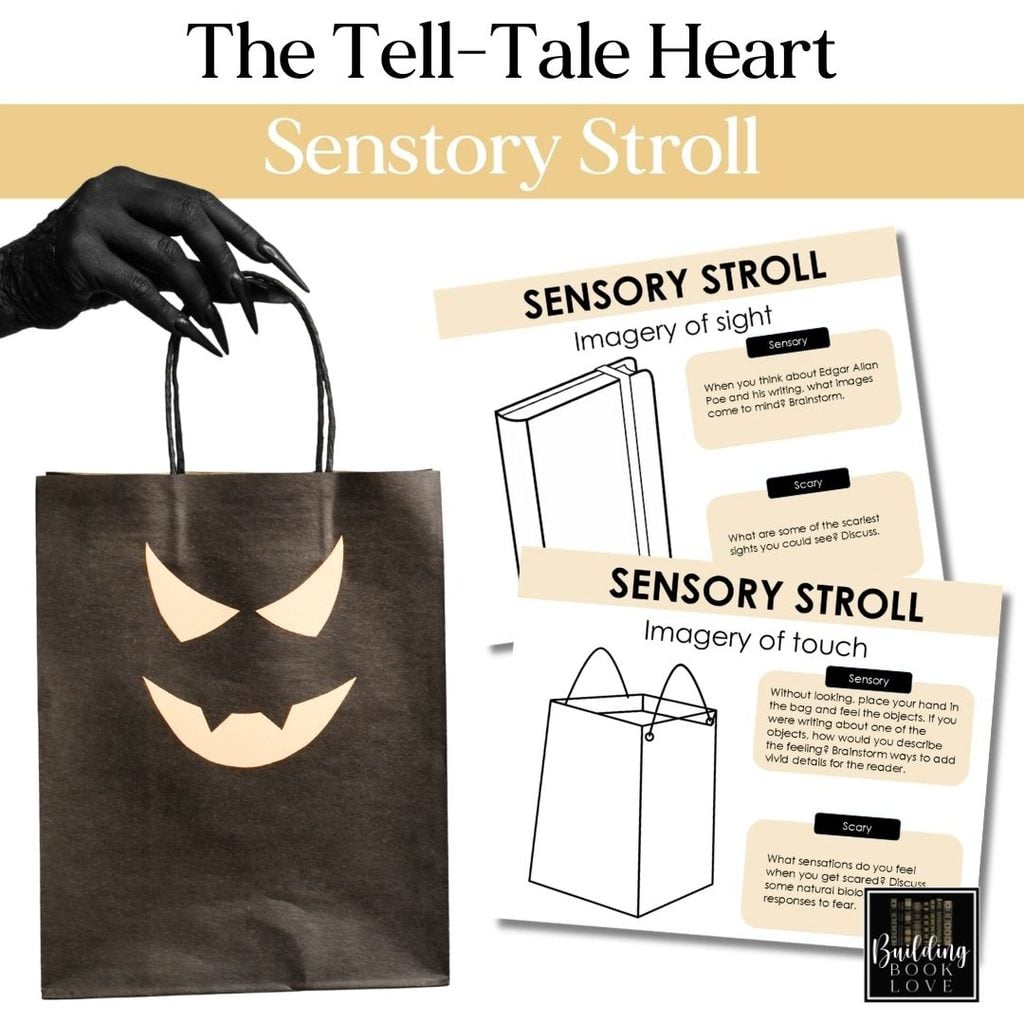
Introduce imagery with a sensory stroll
Before diving into the text, set up sensory stations around your room and let students review imagery on their feet instead of in their seats. Students will move through five quick stations for each of the five senses (sight, smell, sound, taste, and touch). For example: At the touch station, students will stick their hand into a bag to explore what curiosities you’ve placed inside. This will build upon their curiosity while also reviewing imagery. You can grab these sensory stations here: The Tell Tale Heart Activities.
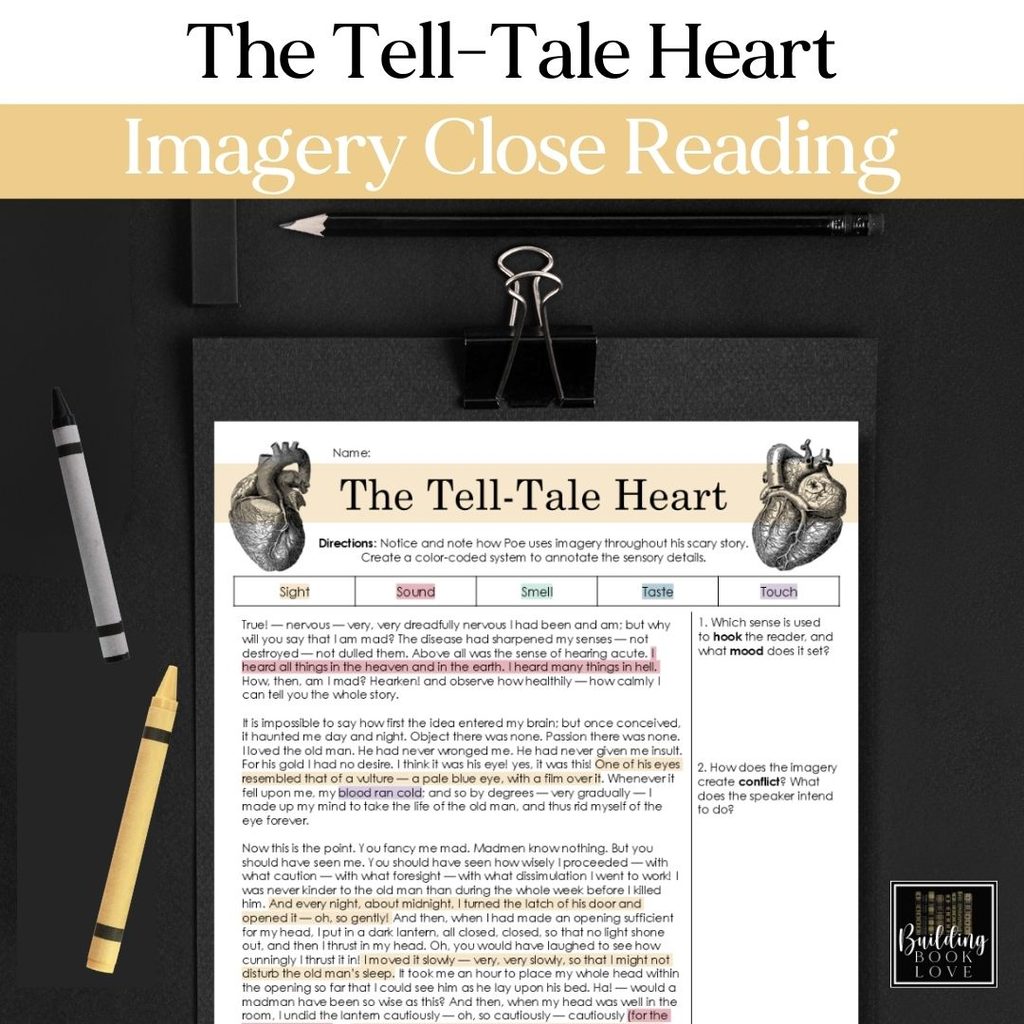
Annotate The Tell-Tale Heart by color-coding imagery
This is the heart of The Tell-Tale Heart lesson plan. As students read, have them color-code the text by sense — one color for sound, one for sight, one for touch, and so on. It’s a simple annotation strategy, but it does a lot of heavy lifting:
- It keeps students actively engaged instead of passively reading
- It makes Poe’s imagery patterns visually obvious (they’ll notice the sound imagery explode near the end)
- It sets up rich discussion about what imagery adds to the story
While The Tell-Tale Heart is full of imagery, Poe doesn’t add any taste or smell. One fun prompt is to ask students to add it in for him. What might fear smell like? What might madness taste like?
Additionally, students will answer prompts during reading that relate to imagery but also help them dig deeper into the text. For example: Which sense is used to hook the reader, and what mood does it set? You can find these Tell-Tale Heart analysis activities in this lesson plan.
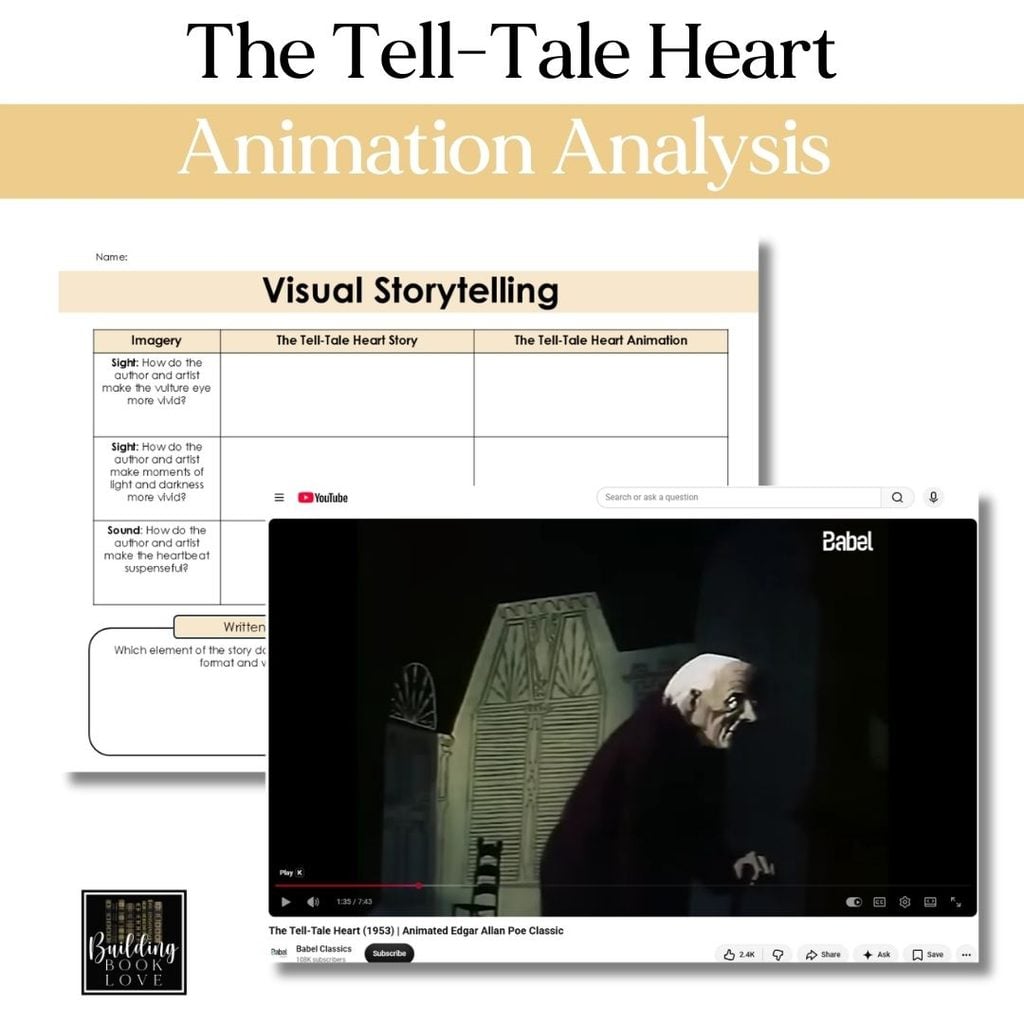
Analyze The Tell-Tale Heart animation
Once students have a solid grip on the text, pair it with a Tell-Tale Heart short film. It’s always a treat when there’s an animation pairing, and The Tell-Tale Heart has just that! After watching a quick 7-minute animation, students will analyze how the same story shifts across mediums. They’ll analyze imagery in the animation and compare it to Poe’s short story. This pushes students past basic comprehension and into a deeper literary analysis. It’s also just a nice payoff after The Tell-Tale Heart close reading activity. You can download this Tell-Tale Heart activity in this lesson plan.
Write a super short scary story
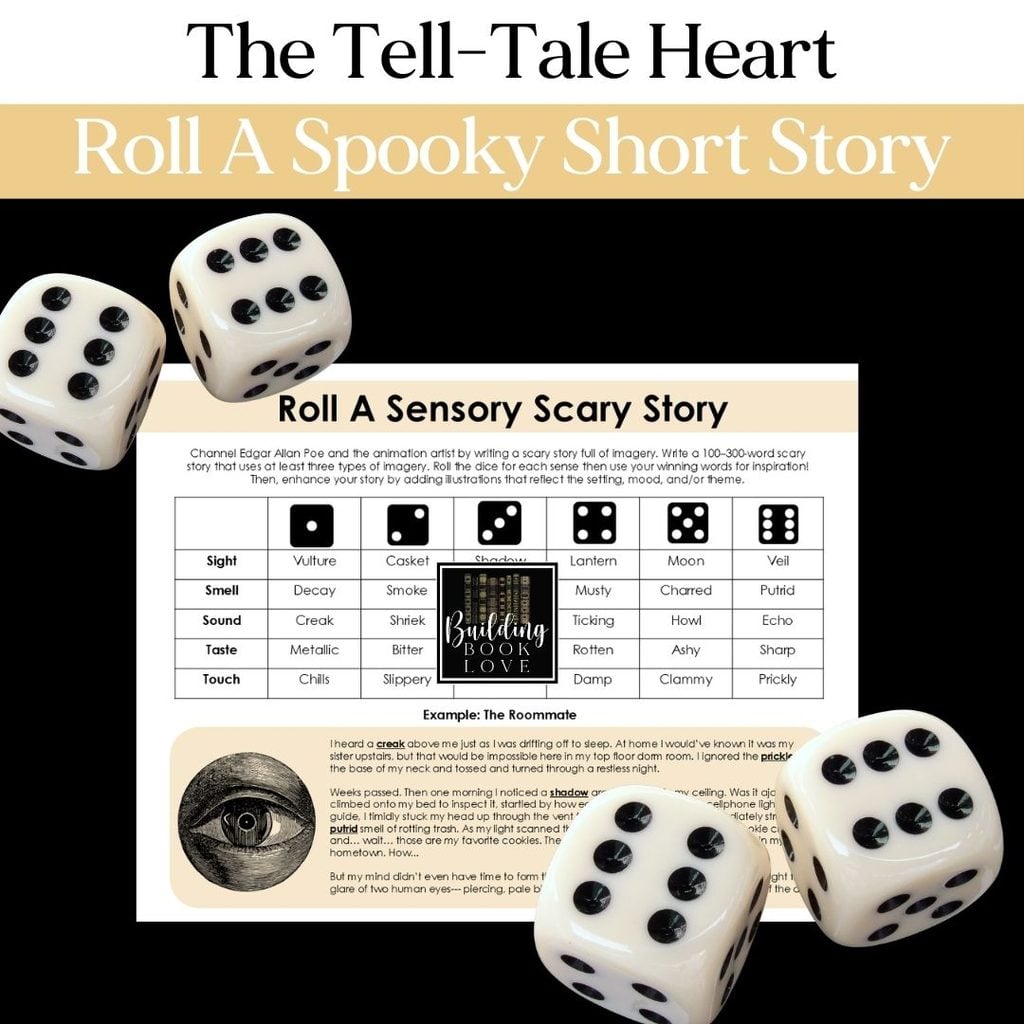
Finally, let students flip from reader to writer. Using dice (real or digital), have students roll for random story elements and craft their own super-short sensory scary story. They’ll use at least three forms of imagery in the same way Poe does, but in just 100-300 words. It’s a low-pressure, high-engagement way to check whether the imagery lesson actually stuck! You can find these Tell-Tale Heart activities in this lesson plan.
Conclusion for The Tell-Tale Heart Activities
Poe knew exactly what he was doing when he wrote this story, and with the right activities, you can make your students feel every beat of it, too. From the moment they walk in to writing the last line of their own spooky story, this Tell-Tale Heart lesson plan keeps students moving, thinking, and creating.

